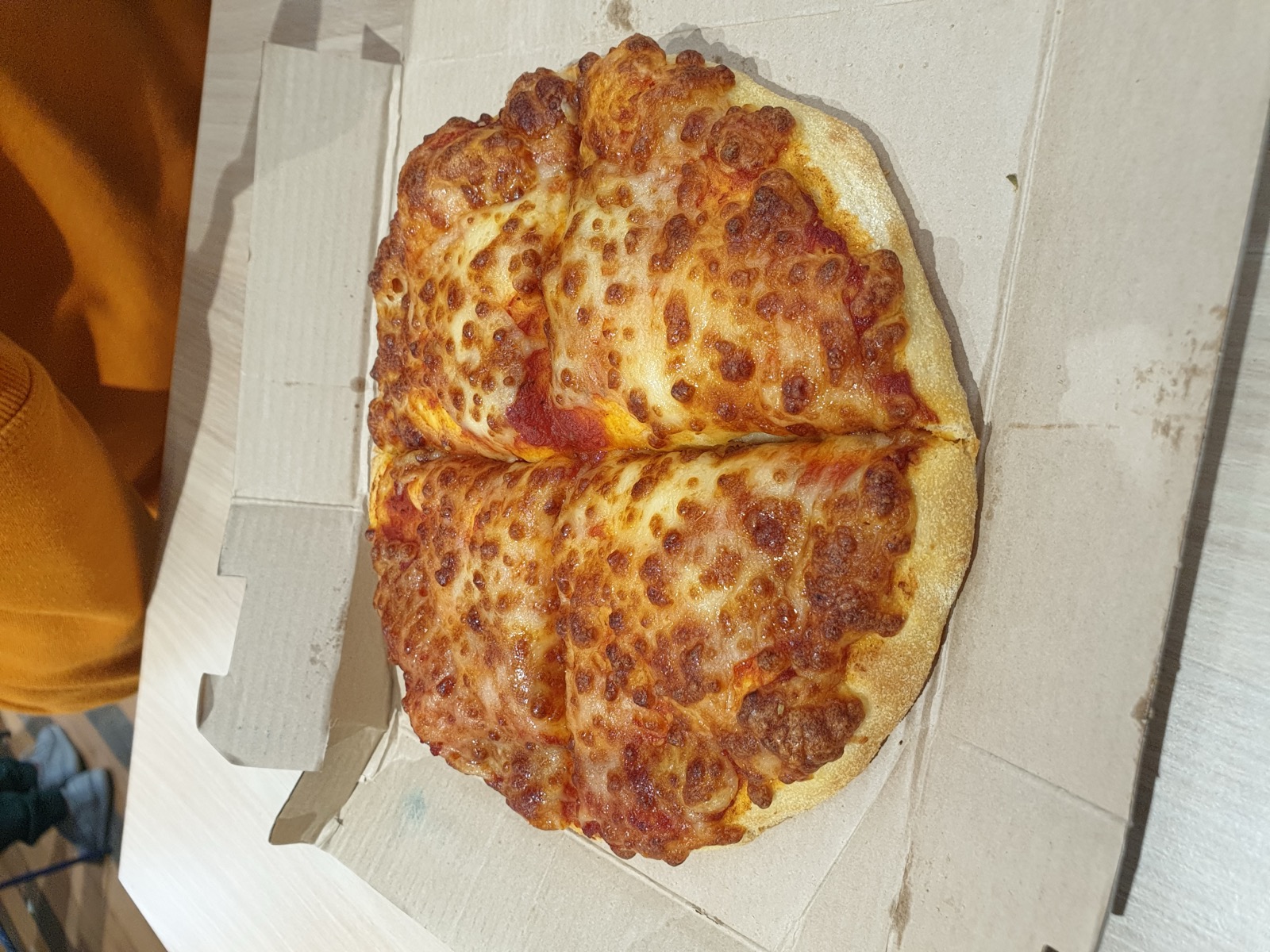
All pizza uses some kind of baking surface, so the phrase “pan pizza” can sound unhelpfully obvious. In practice, it points to dough that proofs or bakes in a defined pan with enough oil or fat to influence the lower crust. The walls contain the dough as it rises. The base receives sustained contact heat. The interior can remain soft and breadlike while the bottom develops a fried or crisp character. Round chain-style pan pizza, home sheet-pan pizza and regionally specific rectangles may share part of this logic without being identical.
How the pan changes dough
A free-standing or deck-baked pizza can expand outward and upward according to shaping and oven heat. A pan gives it boundaries. The dough may be pressed toward the sides and allowed to relax or rise in place. Oil reduces sticking, transfers heat and flavors the crust. The material, color and thickness of the pan alter how rapidly the base browns.
This means “thick” alone is not enough. A pan pizza should show evidence of the vessel: an evenly defined footprint, a bottom with color and texture, and sides shaped by contact. The interior should be baked through, with enough air to avoid a gummy band beneath the sauce. A pale, soft base can result from insufficient heat, excessive toppings or steam accumulated after baking.
Pan pizza and Detroit style are related, not interchangeable
Detroit style belongs within the wider world of pan-baked pizza, but carries more specific cues: a rectangular pan, airy crumb and cheese intentionally spread to the edge to form a caramelized border. A generic pan pizza may be round, retain an exposed dough rim and emphasize uniform softness. The distinction is useful when reading menus because the word “pan” does not promise a frico-like cheese edge.
Pan pizza in a chain context
National chains helped make pan pizza a familiar American category. Pizza Hut is especially associated with pan pizza, but current crust choices, toppings, sizes and availability can differ by restaurant and market. This guide does not reproduce a permanent menu because no independent summary can replace the live official listing for your selected store.
When using Pizza Hut's official site or app, select the restaurant location before comparing crusts. Read the local item description, any customization limits and the final checkout price. Promotions may apply only to certain sizes, toppings, channels or fulfillment methods. If pan texture matters more than a discount, avoid switching crust solely because a coupon defaults to another base.
Build for balance, not maximum load
A thicker crust can support more topping mass, but that does not make unlimited toppings harmless. Extra vegetables add water. Multiple meats add salt and fat. Extra sauce contributes moisture near the upper crumb. A balanced build gives the interior room to remain light and the bottom a chance to stay distinct.
- Start with contrast: one rich topping and one fresh or sharp topping often create more definition than four similar meats.
- Protect the base: consider whether a heavily sauced specialty pie will travel through a long delivery window.
- Size the meal honestly: pan slices are often more filling than thin slices of the same diameter.
- Confirm substitutions: crust and cheese substitutions can change availability, allergens and texture.
Delivery, carryout and box steam
Pan pizza holds warmth well, but retained heat is not the same as retained crispness. Vapor from sauce, cheese and dough rises into the box and can settle back onto the crust. The longer the trip, the more the bottom shifts from crisp toward soft. Delivery may still be the right choice for convenience; just choose a nearby location and be ready to receive the order.
Carryout gives you a shorter custody chain. Confirm the estimated ready time, arrive close to it and keep the box flat. At home, move slices you are eating to plates or a rack rather than leaving the entire pie in humid cardboard. Do not place the box itself in an oven; packaging may not be designed for heating.
Reheating restores the intended contrast
Promptly refrigerated pan pizza is a good candidate for reheating because its substantial crust tolerates renewed heat. An oven or covered-then-uncovered skillet approach can warm the interior before re-crisping the bottom. Equipment varies, so monitor closely and follow current USDA guidance for safe storage and reheating temperatures.
The central pleasure of pan pizza is not thickness for its own sake. It is contrast engineered by the vessel: a soft, raised interior beside a deeply colored base and edge. Read the current menu, keep toppings deliberate and shorten the steam-filled journey to preserve that design.